
Print Is Evolving, Says Zeejprint CEO Ahmed Siddiqui
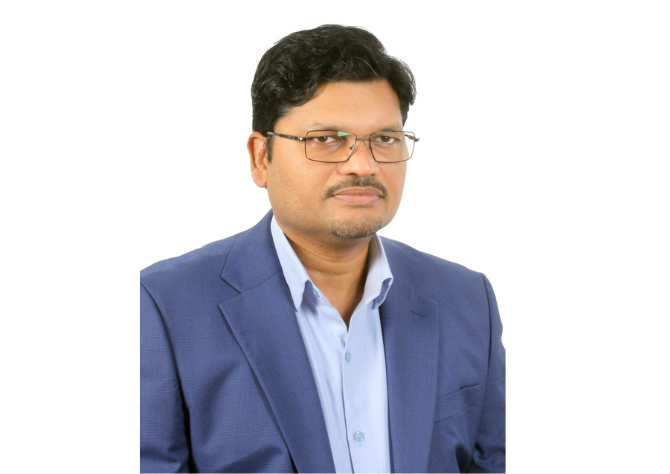
Click on image to download high resolution version
Established in Riyadh in 2003, Zeejprint has developed into one of Saudi Arabia’s established multi-branch printing companies, serving customers across major commercial centers including Riyadh, Jeddah and the Eastern Province. In an exclusive interview with Gulf Print & Pack, CEO Ahmed Siddiqui discusses the company’s journey, the changing behavior of print buyers, the consolidation of its branch network and Zeejprint’s transformation beyond traditional commercial printing.
Q) What were the key factors that helped Zeejprint scale from a local operation into a multi-city network? What are the biggest operational bottlenecks when expanding into new cities?
Siddiqui: One of the most important factors behind our expansion was our team. We have been fortunate to work with capable and committed people who remain united and focused on solving problems, even in difficult circumstances.
We also developed and deployed business operating software that improved visibility, coordination, and operational control. When a business operates across multiple locations, strong systems become essential. Without standardized processes, reliable data and effective software, maintaining consistency becomes extremely difficult.
The biggest challenge in entering a new city is not simply opening a branch. It is achieving sufficient demand while maintaining the same quality, service standards and operational discipline. The right people, equipment, workflow, production planning and local market economics must all work together
Customer behavior is now changing, with more orders moving online and fewer customers needing to visit a physical branch. Therefore, the next stage is not necessarily about opening more locations. It is about optimizing our network, consolidating locations where appropriate, strengthening centralized production and sales coverage, and retaining convenient service points where speed and same-day delivery create real value.
Our experience has taught us that expansion must be sustainable. Growth requires strong systems, disciplined cost management and a committed team—not simply a larger physical footprint.
Q) Do you see print becoming more niche or evolving into integrated marketing solutions?
Siddiqui: Traditional commercial printing is becoming more selective. Products such as business cards, flyers, brochures and even some books are increasingly being replaced by digital communication, particularly when customers only need to distribute information.
However, this does not mean that print is disappearing. It means that print is evolving. Physical products remain valuable when they provide functionality, brand experience, convenience or a tangible connection that digital communication cannot fully replace.
For me, print has always been about helping people and businesses communicate. Today, that message may be carried through paper, packaging, labels, signage, branded merchandise, an NFC-enabled product or a digital platform.
I therefore see print becoming part of a broader business communication and branding solution. Print remains powerful, but it creates greater value when it is connected to the customer’s overall brand message and business objective.
Q) Which print products or services are currently seeing increased demand?
Siddiqui: We are seeing stronger opportunities in products that must remain physical, particularly short-run packaging, labels, personalized products, promotional merchandise, premium corporate gifts and branded materials used at physical locations.
Customers increasingly want flexibility. They do not want to hold large inventories, especially when products, prices, campaigns and designs change frequently. This creates demand for shorter production runs, faster turnaround and the ability to customize or replenish products as required.
Packaging is particularly important. Emerging brands, restaurants, perfume businesses, chocolate companies and online sellers often need smaller quantities for launches, seasonal campaigns, product testing or customized editions. Short-run production allows them to enter the market without committing to excessive stock.
We also see opportunities in products that connect physical and digital communication, such as NFC business cards and QR-enabled products.
Q) What differentiates Zeejprint from smaller local print shops and international competitors? How do you defend against price competition in a commoditized market?
Siddiqui: Every part of the market has a role. Smaller print shops can be highly effective for localized and immediate requirements, while larger companies can provide broader capabilities, production capacity, consistency and support across multiple locations.
International competition is also valuable because it exposes the market to different technologies, service models and production methods. Healthy competition encourages all of us to innovate and operate more efficiently.
Zeejprint’s differentiation comes from its experience, production capability, service network and understanding of both - urgent short-run requirements and larger corporate needs.
In a commoditized market, price is important, and we must remain competitive. However, the lowest price alone does not guarantee the best business result. Customers also value speed, consistency, technical guidance and confidence that their work will be delivered correctly and on time.
Q) Is expansion beyond Saudi Arabia part of your long-term strategy?
Siddiqui: Our immediate priority is to strengthen and transform Zeejprint’s operations in Saudi Arabia. The market is changing, and we are adapting our network, cost structure, product mix and service model accordingly.
We believe Saudi Arabia continues to offer significant long-term opportunities, particularly in packaging, retail branding, hospitality, events, personalized products and technology-connected physical communication.
Geographical expansion may be considered in the future through partnerships or capital-light models, but expansion for its own sake is not our objective. Our priority is to build a sustainable, efficient and future-ready business.